Antibiotic Resistance
The microscopic battle with microbes, and what you can do to help.

What is it?
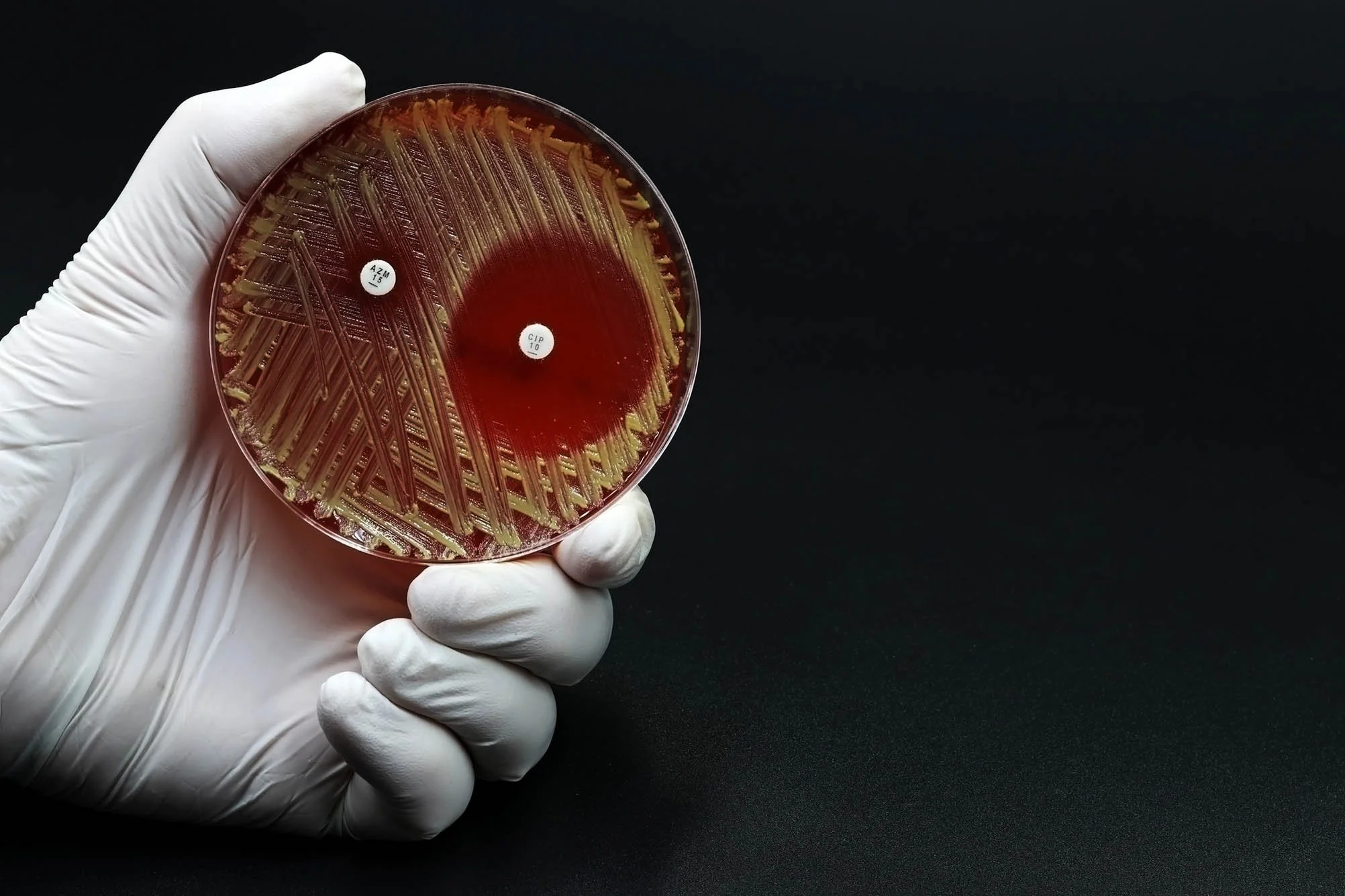
Antibiotic Resistance (AR) is the term used to describe the evolution of bacteria and how they respond to the effectiveness of antibiotics. This in turn, makes bacterial infections harder to treat and more dangerous.

Why do bacteria evolve and what causes it?
Bacteria evolve simply to survive and multiply in a changing environment. As they rapidly copy themselves, random genetic mutations occasionally give a bacterium a "shield" against an antibiotic. When antibiotics wipe out all the weak bacteria, the single resistant survivor is left behind to multiply and pass its resistance genes to other bacteria.

How can we fight antibiotic resistance?
Practicing good hygiene—like washing hands regularly, handling food safely, and keeping vaccinations up to date—prevents illnesses in the first place and lowers the overall need for antibiotics.
A Global Concern
Antibiotic resistance is associated with higher mortality rates, and decreased access to care for patients. Antibiotic resistance also drives health care costs, largely through increased hospital stay and higher need for intensive care. It also increases reliance on second-line antibiotics and additional diagnostic testing.
Antibiotic resistance also drives socioeconomic issues within healthcare. AR disproportionately affects vulnerable populations, reduces human productivity and erodes public trust in medicine. In addition, drug-resistant infections impact the health of animals and plants and reduce productivity in farms, threatening food security.